
Sustainable economy is a concept that seeks to reconcile economic growth with environmental protection and social well-being. This is a global objective that requires the participation of all sectors of society, including households.
Households are responsible for an important part of the consumption of
resources and the generation of waste, therefore, it is important that they adopt measures to reduce their environmental impact and improve their economy.
Climate change and the scarcity of natural resources are two of the main challenges facing humanity in the 21st century. In this context, it is increasingly important to adopt measures to reduce our environmental impact and contribute to sustainable development.
One of the most effective ways to do this is by maintaining a sustainable economy at home. This means adopting habits and practices that reduce the consumption of resources, such as water, energy and materials.
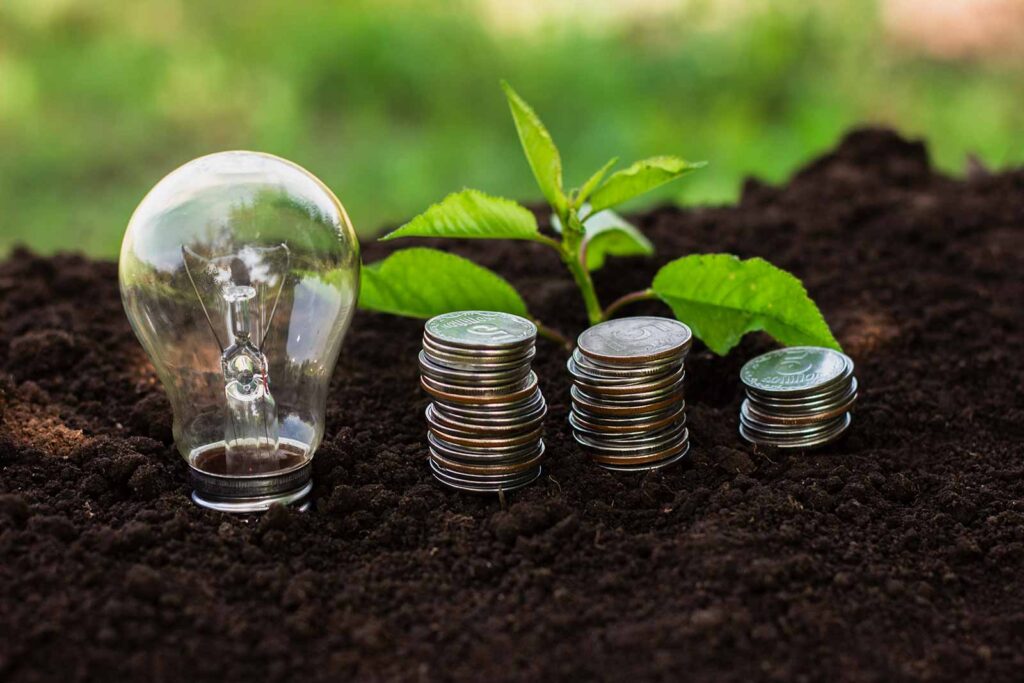
The home is a space where large amounts of resources are consumed. According to the World Health Organization, energy consumption in homes represents around 25% of the world total, with water consumption in homes reaching 10%, occupying the third position in terms of consumption after agriculture and the industry.
Adopting sustainable habits and practices at home can help reduce the environmental impact of our homes. These measures can contribute to the conservation of natural resources and the reduction of greenhouse gas emissions.
Responsible consumption is a lifestyle that seeks to reduce the environmental impact of purchases. This can be achieved in various ways, such as reducing the consumption of unnecessary goods and services, or choosing to use sustainable products.
There are many products on the market that are made with recycled materials or that use more environmentally friendly production processes, as well as items that use positive environmental practices, such as avoiding the use of plastics in their packaging.
At home there are many ways to encourage a sustainable economy, so by practicing an economy based on reuse and obtaining the maximum use of goods before discarding them, it is possible to reduce the generation of waste and consequently reduce energy and water consumption. , elements perhaps necessary for recycling or treatment in specific waste treatment plants, thus encouraging the repair or reuse of these goods or their components for other functions or tasks in the home, it is possible to extend the useful life of the good and avoid generation of unnecessary waste.
Through reasonable consumption, energy consumption is also optimized. Energy saving is one of the main factors that contribute to fighting climate change.
Therefore, it is important to take measures to reduce energy consumption at home, turning off lights and appliances when not in use, using efficient appliances, installing energy-saving systems, such as heating systems. insulation that helps keep heat in winter and cold in summer, reducing energy consumption derived from the use
of air conditioning devices and of course taking advantage of natural light.
Likewise, water is a limited natural resource, vital for maintaining life on earth, and that is why it is important that it be used responsibly, avoiding its waste and waste, favoring the implementation of measures that encourage savings in its water. consumption, such as keeping taps closed when brushing teeth, shaving or soaping in the shower, repairing water leaks and avoiding losses from distribution networks in
common areas and spaces of the neighborhood communities, buildings and
urbanizations, use efficient irrigation systems, and whenever possible reuse water.
On the other hand, increasing the consumption of local foods reduces the carbon footprint associated with food transportation. Therefore, it is advisable to consume food produced in the area where you live, buying local products, encouraging self-cultivation if possible, and supporting small producers.
In addition to all of the above, managing a sustainable economy at home also means managing the use of certain external services, the costs of which are covered through the family budget, for example, transportation costs, both private and public, which by choosing By carrying out our transfers in the cleanest ways possible, they will contribute to reducing the emission of polluting gases into the atmosphere, and will optimize the associated energy consumption, thus, the emission of carbon dioxide and the energy consumption of fossil fuels will be lower, if within In cities, we opt for public transport such as the subway or buses, for long journeys, and we make short journeys on foot, or using personal mobility vehicles.
All of the above in one way or another affects the generation of waste, reducing production and the amount thereof, however it is possible to further reduce the amount of waste we produce, for example by reducing the consumption of packaged products, or limiting the use of packaging to what is strictly necessary and reusing them whenever possible.
Maintaining a sustainable economy at home is a simple and effective way to contribute to sustainable development. The measures that have been presented are simple to implement and can have a significant impact on the environment.
In addition to all of the above, it is advisable to educate family members about the importance of sustainability, participate in local sustainability initiatives, and support companies that promote sustainability. Adopting sustainable habits and practices at home is a responsibility that we all have and by doing so, we can contribute to a more sustainable future for all.