


The existence of more than 8.7 million different animal species on the planet gives an idea of the greatness of the animal diversity of the planet on which we live.
How is it possible to count this amazing number of animals? Through science and many years of research, biologists have managed to estimate the populations of different groups. For example, there are around 5,000 species of mammals, 10,000 species of birds and more than 25,000 species of fish. But invertebrates, specifically insects, surpass them all, with more than 1 million identified species.
The Incredible Diversity of Animal Species on the Planet
There are around 8.7 million animal species on our planet. Arthropods, such as insects, spiders and crustaceans, represent the vast majority with more than 6 million species. Vertebrates, which include fish, amphibians, reptiles, birds and mammals, exceed 66,000.
Fish constitute the most abundant group of vertebrates with more than 33,000 species, followed by birds with nearly 10,000 species, with an estimated 5,500 existing mammal species.
Reptiles such as snakes, lizards and turtles represent about 10,000 species and amphibians such as frogs, toads and salamanders have about 8,000 animal species.
These figures are estimates, since many animal species have not yet been discovered or described by science. Tropical forests, jungles and coral reefs are home to the greatest animal biodiversity on the planet. It is believed that they are home to most of the species yet to be discovered, which is why preserving these fragile ecosystems is essential to protect the diversity of animal life that sustains our planet.
Total Number of Animals on Earth: How to Make an Approximate Calculation?
There are several ways to make an approximate estimate of the total number of animals on the planet. Here we present some of the strategies most used by ecologists:
- Counting individuals: It consists of counting the number of animals of a species in a sample of its habitat and then extrapolating that value to the entire habitat. It is a precise method but requires a lot of time and resources.
- Capture-recapture: Animals are captured, tagged and released, then animals of the same species are captured again and the proportion of tagged animals is calculated. That proportion is used to estimate the total population. It is useful for mobile species.
- Transects: Animals observed are recorded while traveling a predetermined route through their habitat. The density of animals is then calculated and extrapolated to the entire area. It is a quick method but can give inaccurate results.
- Statistical models: Use data from historical counts, growth and mortality rates, food availability, and predators to create models that estimate population size. They require a lot of data but can be very precise.
In any case, calculating the total number of animals on the planet is a monumental task. Scientists use multiple methods to obtain the most precise estimates possible of the populations of different species and thus measure the magnitude of the planet’s animal biodiversity.
Estimating the total number of animal species on Earth is a task of enormous complexity, making it necessary to highlight the lack of exhaustive studies and the difficulty of access to certain habitats.
Although there are still many regions of the planet to be thoroughly explored, such as the ocean depths, tropical jungles and other remote ecosystems, some of these habitats are difficult to access for researchers, so their animal diversity remains unexplored, such as the great mountains. , the arid deserts and the polar regions, where species still unknown to science could live.
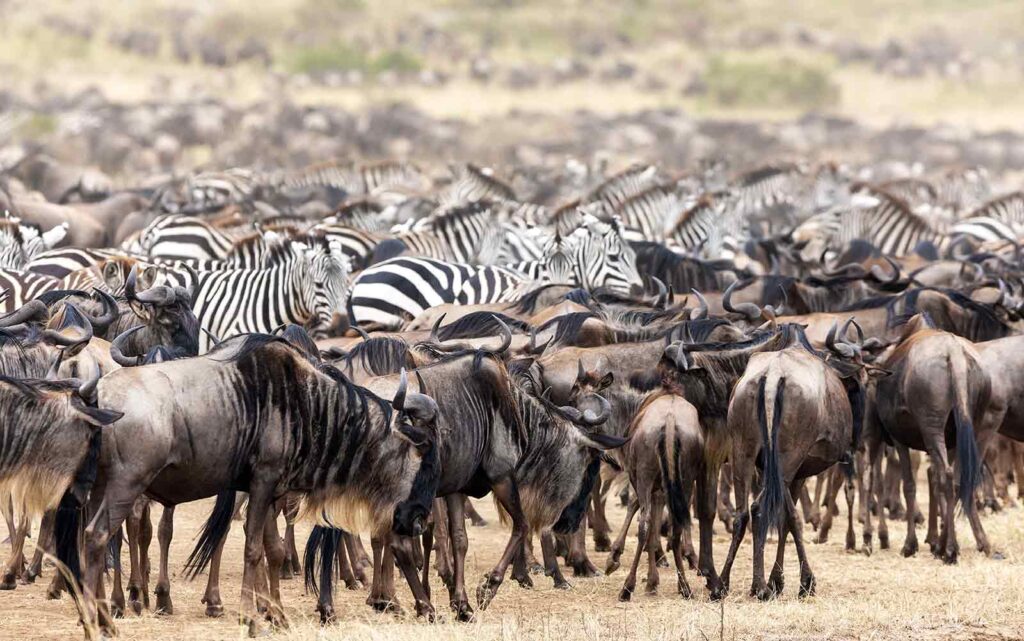
In addition, the microscopic size of many species, such as mites, nematodes and other tiny invertebrates, which due to their small size, go unnoticed and are not studied, as well as the morphological similarities between some species and even undocumented extinctions, where species disappear before being discovered and described by science, make the task extremely difficult.
As an example, it is common in insects, spiders, mollusks and crustaceans to need genetic studies to determine if two specimens belong to the same species or if they belong to different species.
It is estimated that for every known mammal species, there are at least 20 undescribed species of nematodes, however it is believed that hundreds of species become extinct each year without leaving a trace in scientific records, due to the loss of their habitat or other factors.
Most abundant animals and species
The most numerous animals on the planet are arthropods, which include insects, spiders, crabs and shrimp. It is estimated that there are more than one million species of arthropods, representing more than 80% of all animal species.
Insects are the most abundant arthropods. Ants alone exceed 100 billion individuals. Beetles, flies, fleas and mosquitoes are also among the most numerous insects.
Although humans are the dominant species, life on Earth is largely dominated by arthropods and insects.
They outnumber us by billions!
Locusts are also one of the most numerous insect species, with population densities of up to 80 million individuals per square kilometer.
In turn, fish are extremely abundant, with more than 33,000 species inhabiting the world’s oceans and rivers. Most fish are small, such as herring, tuna, and cod.
Birds are another numerous species, with more than 10,000 species worldwide, some of the most abundant being sparrows with a global population of more than one billion, starlings with more than one billion individuals, and pigeons, with a population of more than 400 million worldwide.
Rodents, such as mice, rats and squirrels, are also among the most abundant mammals on the planet, with more than 1,700 species and a total population of about 60 billion.
Endangered animals
According to the Red List of Threatened Species of the International Union for Conservation of Nature, created in 1964, which has become the world’s most complete source of information related to the global status of animal species and in an indicator of the health of global biodiversity, there are more than 28,000 animal species at risk of disappearing from the face of the Earth.
Of these, some of the most emblematic species in danger of extinction are;
- Mountain gorillas, of which there are less than 900 specimens left in the wild and which poaching and the destruction of their habitat are killing them.
- Rhinos, especially black rhinos, of which only 5,000 remain, are victims of poaching for their valuable horn.
- Orangutans, our closest relatives in the animal kingdom, are in grave danger from deforestation of Asia’s tropical forests.
- Blue whales, the largest animals on the planet, were on the verge of extinction until recently, but thanks to the ban on commercial hunting, up to a few thousand specimens have recovered, although they remain a vulnerable species.
- Lions, which in the past inhabited much of Africa and Eurasia, and of which today only 20,000 specimens remain in the wild, concentrated in natural reserves in Africa.
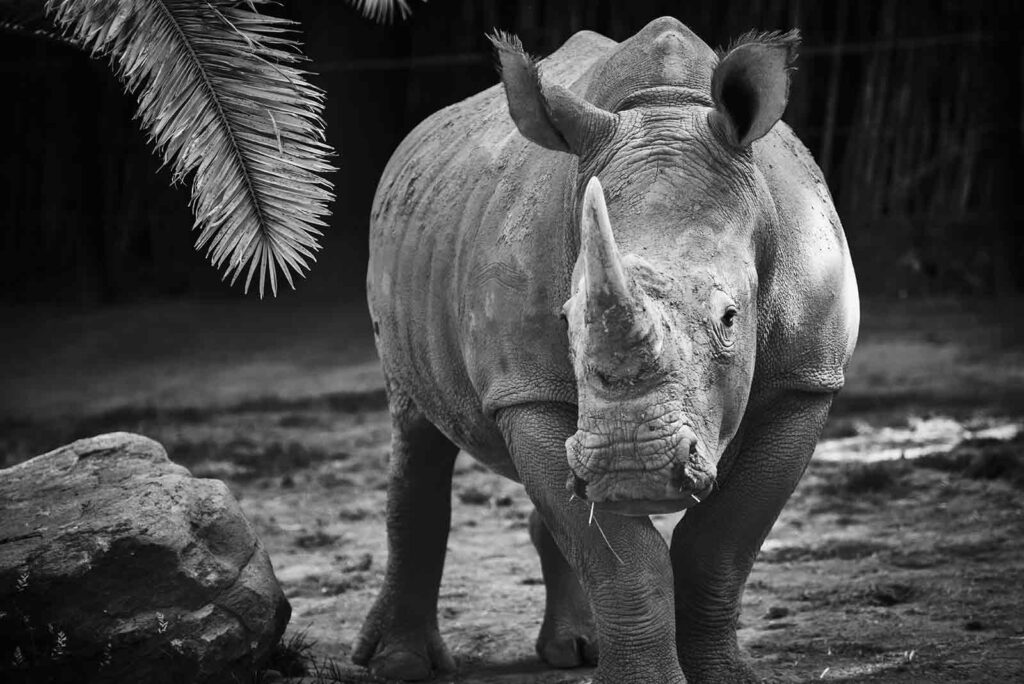
Habitat loss, poaching, species trafficking, diseases and climate change are the main threats that put the survival of numerous animal species at risk.
Every year, between 100 and 150 animal species disappear, according to data from the International Union for Conservation of Nature (IUCN). However, the exact number is difficult to determine precisely. What we do know is that the rate of species extinction has accelerated dramatically, at least 100 times faster than the natural rate.
Most species extinctions are caused by human activity, such as habitat destruction, pollution, and climate change.
On the other hand, new animal species are discovered every year. Between about 15,000 to 20,000 new animals are identified annually, according to the Smithsonian Institute’s Biodiversity Center, the majority are insects, arachnids and other invertebrates, although some mammals, reptiles, amphibians and birds also continue to be discovered.
In recent years, for example, a new species of capybara, a type of kangaroo rat, have been discovered in Indonesia, and a new species of owl in China. Although the number of discoveries of new species is encouraging, the rate of extinction far exceeds that of new discoveries, highlighting the severity of the biodiversity crisis facing our planet.
It is urgent to take measures to protect biodiversity
and avoid the sixth mass extinction in history.
Each species plays a unique and irreplaceable role in the complex ecosystems of our planet. From tiny microbes to blue whales, life has found incredible ways to adapt and thrive. By protecting biodiversity, we ensure that these wonders of evolution endure. And although humans have caused considerable damage, there is still time to change course. It is up to us to decide the future we want for the animals we share this amazing planet with.