


In the last 23 years we have suffered the consequences of fire in the Canary Islands. In August 2023, we have again suffered the vigor of fire, this time on the island of Tenerife, with the declaration of a fire that, in just three days has managed to cover a perimeter of more than 70 km, it is worth remembering some figures, related to the virulence and frequency of these disasters in our archipelago.
The Canary Islands have suffered more than 1,700 forest fires, which have devastated more than 20,000 hectares of land in the last 20 years. Forest fires are a serious problem in the Canary Islands, since the archipelago is a mountainous territory with dry vegetation, which is very susceptible to fires. Studying official data published by different agencies such as the Institute of Statistics of the Autonomous Community of the Canary Islands, 96.25 percent of the fires that occurred in the Canary Islands between 2006 and 2015 were categorized as large fires, which cause damage in 6,500 hectares on average per fire.
It is true that it can be considered that the Canary Islands have a scarce concurrence of fires, however, when they occur they usually result in large fires over large areas, generally caused by the orography of the islands, its weather conditions and the lack of reinforcement equipment, which usually must arrive from the peninsula, allowing the rapid spread of fire, in most cases.
Looking at data prior to 2006, it is striking that in the 90s, the number of fires reached 34 in municipalities such as Tejeda in Gran Canaria, or 51 in Los Realejos in Tenerife, but the largest fire occurred on the island of La Palma, in the municipality of Garafía at the end of July 2000, with an area of approximately 7,500 hectares burned.
In the following decade, 2000 – 2010, the municipalities of the island of Gran Canaria were again the ones with the largest area affected by fires, exceeding 8,700 hectares in the municipality of San Bartolomé de Trajana.
In recent years, we must remember the terrible fire that devastated more than 18,000 hectares of forest area and almost 7,000 hectares of wooded area on the island of Gran Canaria, as well as the more than 16,000 hectares also affected by fire in Tenerife in 2007.
However, not everything should be valued only in terms of surface area. In August 2012, the worst forest fire in recent decades in ecological terms originated on the island of La Gomera, in the laurel forests of the Garajonay National Park, which was affected 18% of its surface area (740 hectares). This same year, two other fires devastated 2,500 and 5,000 hectares on the islands of La Palma and Tenerife, respectively.
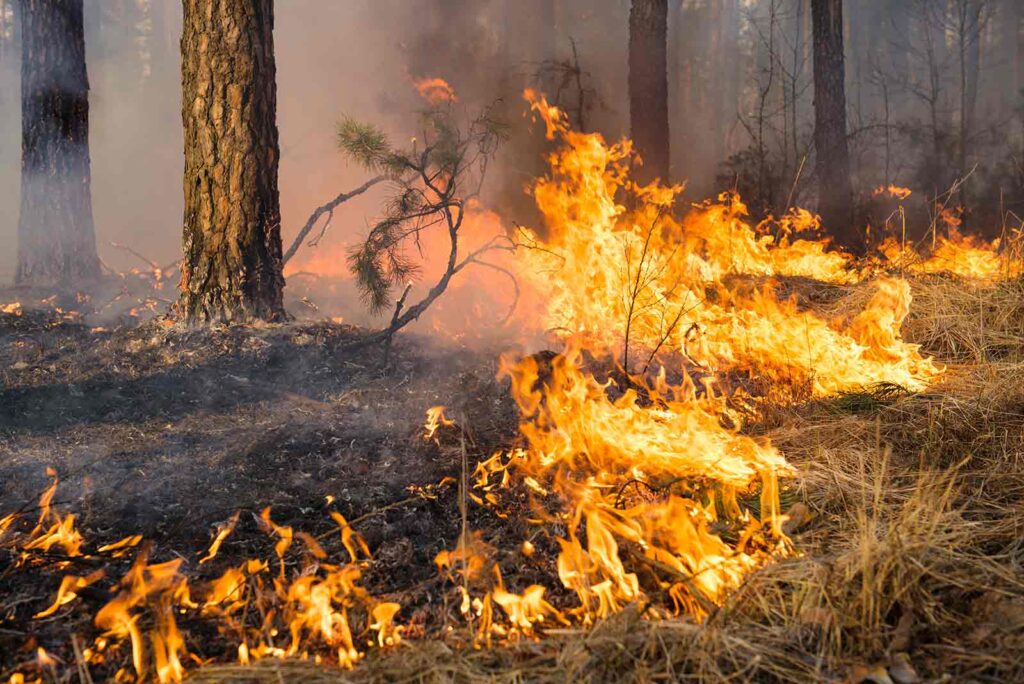
In the last few years there have been several fires of a certain size, in different municipalities of the islands, however, in 2019 the fire again attacked the islands with virulence, this time consecutively on the island of Gran Canaria, where a first fire devoured more than 10,000 hectares, and a second, declared a few days later devastated a perimeter of 80km attacking the green lung of the island, and the natural park of Pinar de Tamadaba, being considered extinguished 40 days later.
With all the above data, and in view of the increased virulence of the latest fires, we must start to become aware ourselves, with respect to our environment, which, in islands with a finite forest area, each of the above events should be considered as a direct attack on the possibilities of health and habitability of these small islands of the Atlantic.
Let us remember that fires favor the loss of diversity, destroying natural habitats and plant and animal species, with greater importance in this case because of the islands, damaging infrastructure such as roads and generating significant losses to farmers, ranchers and homeowners.