



The evolution of women’s fashion throughout history is a fascinating journey that reflects the social, cultural and economic transformations of each era through women’s clothing. From the draped tunics of Antiquity to the avant-garde ensembles of the 21st century, women’s clothing has undergone a constant evolution, challenging norms and redefining the female silhouette.
Women’s clothing before the Middle Ages was a mosaic of colors, textures and styles, which varied depending on the time, culture and social status. From the draped robes of Ancient Egypt to the elaborate costumes of the Byzantine Empire, ancient women used clothing to express their identity, beauty, and social standing;
- In Egypt, Egyptian women wore close-fitting linen tunics, called kalasiris, with wide straps and a straight neckline. The upper classes decorated their tunics with embroidery, jewelry and necklaces. An important element was the headdress, which could be a wig, a veil or a diadem.
- In Greece, the chlamys, a rectangular wool or linen cape, was the basic garment for Greek women. It was fastened with fibulae and could be draped in various ways. Women also wore peplones, long, sleeveless tunics, and chitons, shorter tunics with sleeves. Bright colors and geometric patterns were common in Greek clothing.
- In Rome, Roman women wore long, draped tunics, called a stole, over an undershirt called a tunica intima. The palla, a rectangular cloak, was worn as an outer garment. The upper classes decorated their tunics with embroidery, brocades and jewels. Roman footwear included sandals, flat shoes, and boots.
- In the Byzantine Empire, women wore luxurious and opulent clothing, with silk tunics richly embroidered with gold and precious stones. Headdresses were elaborate and could include crowns, diadems, and veils. Byzantine footwear included pointed shoes with high heels.
- In the Germanic towns, Germanic women wore long, loose tunics of wool or linen, with long, tight-fitting sleeves. They were adorned with brooches, necklaces and bracelets. Germanic footwear included high leather boots.
- In places like India, women wore saris, long, draped fabrics that wrapped around the body, in China they wore long, tight dresses with long sleeves and high collars, and in Japan Japanese women wore kimonos, long, wide tunics with sleeves. long.
Women’s clothing before the Middle Ages not only had an aesthetic function, but also a practical one. The garments protected against cold and heat, and could be used to transport objects or perform everyday tasks, in addition to being a testimony to the ingenuity, creativity and cultural diversity of the women of the time. Through clothing, women expressed their identity, beauty and social position, leaving an indelible mark on the history of fashion.
In early civilizations, women’s clothing was characterized by its simplicity and functionality. Linen or wool tunics and peplos were basic garments for both women and men. The Middle Ages brought with it social differentiation in clothing. Upper-class women adopted long, tight dresses, adorned with fur, embroidery, and jewelry. The peasant women, for their part, wore simple and functional clothing to carry out their daily tasks.
In this period, garments such as:
- The Shirt: Linen or cotton undergarment that covered the body from the neck to the knees.
- Bliaut: Long, loose dress with long sleeves and a round neckline.
- Cendal: Thin, transparent fabric that was used as a veil or headdress.
- Guimpe: Garment that covered the neck and shoulders.
- Kirtle: Long, pleated skirt that fitted at the waist.
- Surcoat: Sleeveless outer garment worn over the bliaut.
During the period between the 5th and 10th centuries, clothing was simple and functional, with long, thick wool or linen tunics. Upper class women adorned their clothing with brooches and jewelry. Later and until the 13th century (Baroque), clothing became more elaborate and elegant. New fabrics such as silk and velvet were introduced. Upper-class women wore bliauts with long, tight sleeves, cinched at the waist with a belt.
With the arrival of the Renaissance, in the 14th century, fashion was characterized by opulence and extravagance. Caps, pointed headdresses that could reach great heights, were introduced. Upper-class women wore dresses with a V-neckline and long, puffy sleeves. During the 15th century the female silhouette became more stylized. Verdugadas were introduced, cone-shaped structures that were placed under the skirt to give it volume. Upper-class women wore dresses with tight-fitting bodices and long, tight sleeves.
During this period, clothing reflected social status, so that the upper classes used luxurious and elaborate clothing, with fine fabrics, embroidery, jewelry and fur, the middle classes wore simpler and more practical clothing, with wool or linen fabrics and The lower classes wore simple and functional clothes, with thick and unadorned fabrics.
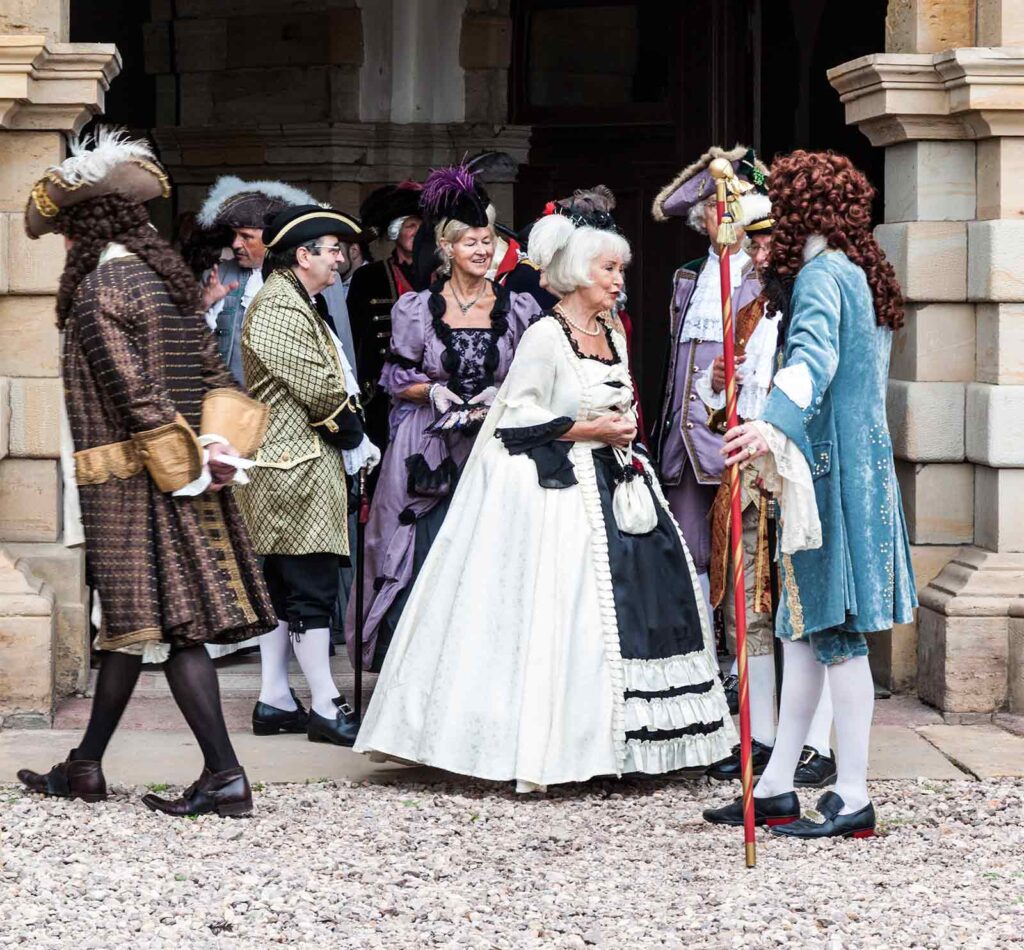
The Renaissance marked a turning point in women’s fashion. Dresses became more opulent and elaborate, with puffed sleeves, plunging necklines, and voluminous skirts. Ostentation and luxury became symbols of social status. The Baroque, for its part, accentuated theatricality and exaggeration in clothing. Crinolines, corsets and oversized wigs created an artificial and lush silhouette.
Fashion from the 19th century to the present, an explosion of color and design
The 19th century was a time of great social and economic changes, and women’s fashion was no exception. Over the course of the century, the female silhouette underwent a radical transformation, from Victorian opulence to the elegance of the Art Nouveau style.
In such a way that during the beginning of the 19th century, influenced by the French Revolution, simplicity and the neoclassical style became fashionable, as well as empire-style dresses, with high waist, low neckline and fluid skirt, made of fabrics of chiffon, muslin and cotton mainly accompanied with accessories such as hats, shawls and gloves.
In the middle of the 19th century, the female silhouette became more curvy, with crinolines and crinolines prevailing, which were structures under the skirt to give volume, and the use of the Corset, a tight-fitting garment that highlighted the waist and bust, as well as the use of puffed sleeves, adorned with lace and ruffles, in dresses made of velvet, silk and brocades, with more complex accessories with ornate hats, jewelry and fans.
However, at the end of the 19th century, there was a return to simplicity, caused by a clear tendency to highlight a more natural feminine silhouette, and the use of dresses with balloon sleeves and flared skirts, Mainly made of silk and wool, with accessories such as wide-brimmed hats, belts and bags.
During the 19th century, large-scale production of clothing items was consolidated, causing greater accessibility for women to a greater variety of designs, colors and fabrics, which together with The appearance of department stores and the dissemination of the latest trends through specialized magazines fostered the rise and revolution of the textile sector and the world of women’s fashion.
Women’s clothing of the 19th century was a reflection of the social and cultural norms of the time. Victorian opulence reflected wealth and social status, while turn-of-the-century simplicity responded to a desire for greater comfort and freedom of movement. 19th century fashion was also marked by the influence of industrialization and the emergence of women as consumers.
Thus, women’s clothing of the 19th century experienced a notable evolution whose elements became a form of personal expression and a tool to communicate the identity, social position and aspirations of women.
The 20th century and so far the 21st have witnessed a revolution in women’s clothing. The female silhouette has undergone radical changes, challenging norms and redefining female aesthetics.
At the beginning of the 20th century, with female emancipation, women began to wear more practical and functional clothing, however with the outbreak of the First World War, women began to work and clothing adapted to new needs.
The Flapper, with short skirts, fitted dresses and short hair, became popular in the 1920s, although they ended up being replaced by elegance and glamor in the 1930s achieved through long, bare-shouldered dresses. and eye-catching accessories.
During the Second World War, clothing became more austere and functional, however in the later 1950s, as a result of the hopes and desires for peace of societies around the world, more daring and fun designs were imposed, with wide skirts. , tight waists and high heels, enhanced by the cultural revolution of the 60s and the arrival of miniskirts, flared pants and vibrant colors.
Starting in the 70s, the rise of individuality and the mixture of styles caused the appearance of casual clothing, athleisure, sustainable and genderless fashion.
In the first decades of the 21st century, the Impact of globalization and technology, access to information, favoring the dissemination of fashion trends worldwide, large-scale production and greater accessibility to clothing for all public, as well as online purchases through the new purchasing channels that emerged on the networks after the consolidation of Electronic Commerce, have completely changed and evolved the world of fashion.
Women’s clothing in the 20th century and so far in the 21st century has been an expression of women’s freedom and individuality. Women have challenged traditional norms and redefined what it means to be feminine through clothing. Fashion has been a tool of empowerment and a way to express a woman’s personality and beliefs.
Since the mid-20th century, the evolution of women’s clothing has been marked by the search for comfort, freedom and individuality. Fashion has been a reflection of the social, cultural and economic changes of the time, and women have used clothing as a way to express their identity and their position in the world.
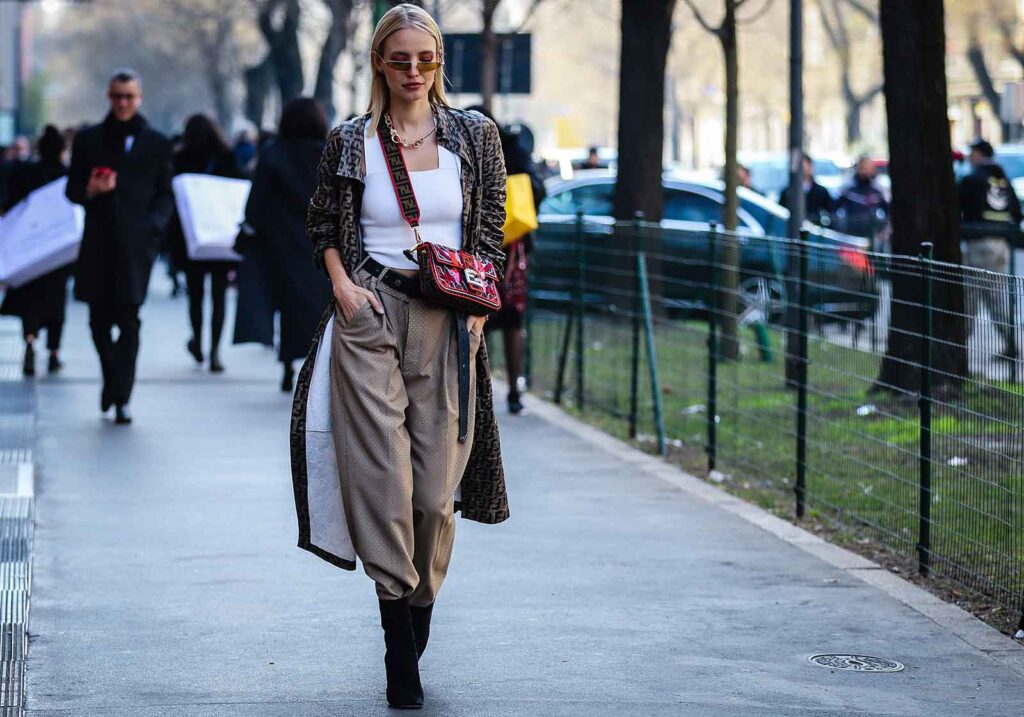
Women’s clothing continues to evolve and adapt to new times. The 21st century woman has access to a wide variety of styles and options to express her individuality and personal style, thanks to globalization and the democratization of information that have allowed women around the world to experiment with different styles and trends. . Comfort and functionality have become priorities, without sacrificing style and individuality.
The evolution of women’s clothing not only reflects the aesthetic trends of each era, but also changes in gender roles, social norms and the fight for equality. Women’s clothing has been a tool of expression, empowerment and vindication for women throughout history.
It’s difficult to predict what the future holds for women’s fashion. However, it is clear that the trend towards diversity and individuality will continue. Women will continue to redefine the rules of dress and use clothing as a way to express their personality and values.
In short, the history of women’s fashion is a reflection of the evolution of women in society. From the simplicity of Antiquity to the diversity of the 21st century, women’s clothing has been a canvas on which the social, cultural and economic transformations of each era have been captured.