


At the end of the 18th century, with the beginning of the first independence movements in the colonies, nationalism began as a political idea, based on the defense of the nation and supported by four fundamental dogmas, the nation , geographical unity, the will of the people, and participating and sharing the language, ethnicity, religion or history in a homogeneous way.
Nationalist ideology arises as a response to legitimate power, which, after the French revolutions and American independence, became represented by the state and not by monarchies.
That is, nationalism was born as a consequence of the appearance of states and the end of absolutist monarchies, its highest representative being the people that make up a state, understanding as people, the citizens who share the four dogmas of nationalism.
However, despite the above, nationalism can also be classified according to its most representative values, such as ethnic nationalism, based on the fact that nationality is inherited according to membership in a specific racial group, or liberal nationalism, which is inspired by the values of equality, tolerance, reason…
In today’s world, where after years of breadth and globalization, the recent pandemic, the crises of different kinds suffered by many countries in recent years, mistrust between nations, wars and fighting due to scarce resources of great importance in the coming years, they have even strengthened nationalisms, and in some cases regionalisms have even emerged, which based on an interpretation of nationalism, try to justify their reasoning based on their own dogmas.
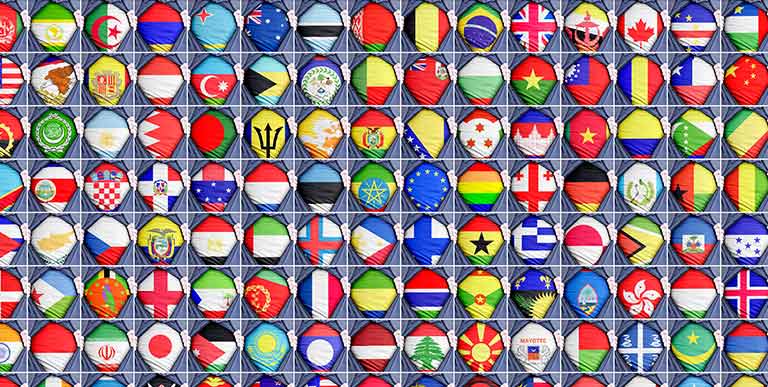
Regionalism has been the cradle of many nationalisms, thus, when a region begins to develop its own cultural and linguistic identity that distinguishes it from the rest of the country, the desire for greater autonomy and even independence arises.
In Spain, for example, regionalist movements in Catalonia, the Basque Country and Galicia laid the foundations for modern nationalisms seeking independence. First, the native languages, Catalan, Basque and Galician, were recovered, then the distinctive culture of each region was promoted. Little by little, the idea began to develop that these regions constituted nations different from Spain.
Something similar happened in other places such as Scotland, Flanders or Quebec. Cultural regionalism ended up leading to political aspirations, the conviction that the region in question should govern itself to preserve its particular identity. Thus, powerful nationalist movements were born that demand independence or a special status within the State.
In both cases, both nationalism and emerging regionalism arise from the people’s need for independence from their rulers. The search for one’s own identity has been a powerful engine in the development of nationalisms. When a group of people share common ethnic, linguistic or cultural traits and do not feel represented by existing political structures, the desire to govern themselves arises.
Therefore, nationalisms and regionalisms can be considered as political and social movements that claim the identity and autonomy of a territory or region, in many cases with the search for independence as the final consequence of these movements.
Nationalisms and regionalisms can be motivated by various factors, such as history, culture, language, religion, economics or politics, and in some cases, these movements can lead to violence or war, as we have already seen. proven in Spain and other European countries.
Nationalisms and regionalisms are political and social movements that claim the identity and autonomy of a territory or region. Nationalism is an ideology that defends the existence of a nation, understood as a group of people who share a history, a culture, a language and a territory. Regionalism, for its part, is a school of thought that defends the autonomy of a region within a State. Regionalism can be cultural, political or economic in nature.
The search for independence is the desire of a territory or region to separate itself from a State and constitute itself as a sovereign State. In the search for this independence, both nationalisms and regionalisms can end, as its discourse becomes radicalized and its initial objectives are not achieved.
The liberal revolutions of the 18th centuries sought the independence of the kings, and the model supported by the bourgeois, sovereigns and landowners, just as perhaps now the regionalists seek the independence of the states to which that belong.
Today, there are numerous examples of nationalism and regionalism around the world. In Europe, independence movements are growing in popularity in several regions; in Scotland, for example, the Scottish National Party has been pushing for independence from the United Kingdom. In 2017, Scotland held an independence referendum, but voters rejected the proposal. However, support for independence is growing, especially among young Scots.
In Spain, Catalan nationalism has long been a community with a strong sense of its own cultural identity, going so far as to hold an independence referendum in 2017 that was declared illegal by the Spanish government. Other separatist movements in the world include Flanders in Belgium, Sardinia in Italy, Irish nationalism in the United Kingdom, Kurdish nationalism in Turkey, Palestinian nationalism in Israel and Tibetan nationalism in China.
In any case, the need to listen to each other, to understand each other, to recognize the different identities, seeing the other as part of ourselves, managing to transcend the labels that separate us and find our common humanity, will allow us to move towards a future where we all fit, remembering that it is easier to share than to divide, and that by being more, we will also be stronger. It is not an easy task, but it is the only one that is worth it.
It would not be a bad thing to remember that, from those revolutions, movements emerged over time that marked the beginning of a progressive democratization, the incorporation of the working class into the political struggle and the first real foundations of capitalism that allowed the regime to be definitively buried. feudal.