



Recent advances in space exploration have been significant, with missions achieving new discoveries and technological advances.
Since the Soviet Union launched the Sputnik 1 space satellite in 1957, which began the space adventure, many missions have been carried out, highlighting the arrival of man to the moon in 1969. However, there have also been many lives lost during these years, cosmonaut Vladimir Komarov being the first human being to lose his life on a space mission.
After man’s arrival on the Moon, a period of discovery began with the sending of various unmanned spacecraft (probes) to planets such as Jupiter or Mars.
In the 1970s, the Voyager1 probe was launched, which, after a long journey through the solar system, entered interstellar space, becoming the first object created by the human being to do so, continuing his journey to the ends of the universe today.
In 1980, the first ship designed to be reused, the Columbia spacecraft, took off, and in 1986 the Soviet Union placed the Mir space station in orbit.
In the 1990s, the Hubble telescope was launched into space, considered today the most important instrument in the history of space exploration. Later in the 2000s, the Spirit and Opportunity robots were sent to the surface of Mars, in 2011 the Messenger probe became the first to orbit Mercury, the New Horizons probe explored Pluto in 2015 and in 2016 the Juno probe reached Jupiter.
The Japanese spacecraft Hayabusa 1 became the first to bring an asteroid sample to Earth in 2010, having visited a small near-Earth asteroid called 25143 Itokawa in 2005 and already in 2020 the Solar Orbiter probe revealed the first images of the Sun.
But in 2019, an international team of astronomers, using radio telescopes installed around the world, managed to take a photo of M87 and obtain an image of the event horizon of a black hole.
In 2021, NASA’s Perseverance rover landed on Mars and began exploring the planet for signs of life. The rover has found evidence of water on Mars, which is an essential component for life.
In 2021, China’s Chang’e 5 probe became the first probe to bring soil samples from the Moon to Earth. The probe has also made observations of the Moon that have helped scientists better understand its history.
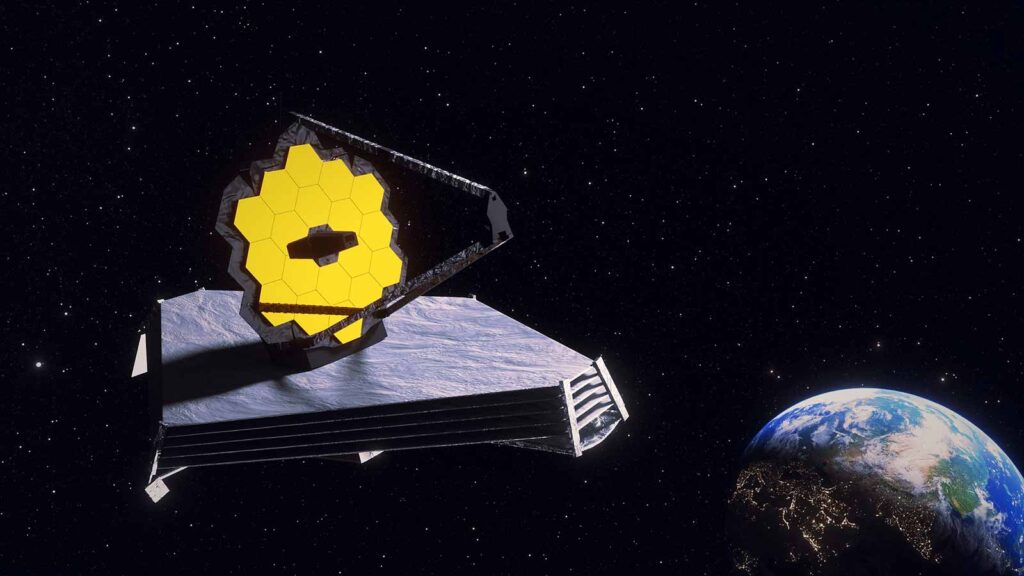
In 2022, NASA launched the James Webb Space Telescope, the most powerful space telescope ever built. The telescope has provided astonishing images of the deep universe, allowing scientists to study objects that have never been visible before, and has become the world’s leading space science observatory. Webb will help us understand the mysteries of our solar system, see beyond distant worlds around other stars, and explore the mysterious structures and origins of our universe and our place in it. Webb is an international program led by NASA with its partners: the European Space Agency and the Canadian Space Agency.
In 2022, SpaceX launched Starship, a rocket that has the potential to revolutionize space exploration. Starship is a reusable rocket that can carry heavy payloads into Earth orbit. This could make space exploration more affordable and efficient.
These are just some of the latest advances in space exploration. Space exploration is a constantly evolving field, and new advances are likely to occur in the coming years.
Some of the most promising advances in space exploration include:
- The development of new rockets and spacecraft that are more efficient and affordable.
- The development of new propulsion technologies that allow spacecraft to travel faster and farther.
- The development of new exploration technologies that allow scientists to study the universe in more detail.
However, all these advances have meant and still mean, even today, an immense effort in economic investment, thus, it is estimated that on average each kilo launched into space costs $16,000, but These costs have not only provided knowledge related to the universe, stars and planets, their history and their composition, they have also had a significant impact on life on Earth.
Today, photovoltaic panels, telemetry, high-performance mobile phone batteries, lasers, ceramics or Teflon are some of the elements, materials and technology that have come into everyday use from their developments in the research associated with the space race. Only in medicine has space provided us with an infinite number of resources, such as the insulin pump, endoscopy, laparoscopy or light prostheses, are progress derived from space exploration, and although in fact the amount of resources invested in space research may seem excessive, it is also true that the benefits that science and technology bring to society also represent incalculable value, which in the case of medicine is incomparable in allowing the survival or improvement of the living conditions of many fellow human beings.
In contrast to these investments that generate an evolutionary return scientifically and technologically speaking, and that in many cases do not exceed 1% of the budgets of the countries involved, the costs incurred by certain countries, for example in the arms race, far exceed the investments made in space exploration, and the benefits returned to societies from their research programs, are much smaller.