


Cancer is a disease as historic as it is harmful, affecting living things for millions of years. The earliest evidence of cancer in animals was found in dinosaur fossils more than 70 million years old. In humans, the first documented case of cancer comes from an Egyptian man who lived about 3,000 years ago.
In ancient times, cancer was known as an incurable disease. Physicians of the time believed it was caused by an imbalance of bodily humours, such as black bile, yellow bile, blood and phlegm.
In the 16th century, the Italian physician Andreas Vesalius published a book on anatomy entitled “De humani corporis fabrica” (The structure of the human body), in which he described cancerous tumours as hard, painless, black, malignant tumours that grow rapidly and can spread to other parts of the body, making them a fatal disease. These descriptions helped doctors to better understand the disease and to diagnose and develop more precise treatments.
In the 19th century, cancer cells were discovered, a discovery attributed to several scientists, including Rudolf Virchow, who proposed the cellular theory of cancer in 1847, which stated that cancer begins in a single cell that becomes malignant.
In 1858, the Italian physician Camillo Golgi discovered that cancer cells have an abnormal nucleus and divide uncontrollably, resulting in the formation of tumours. Later, in 1909, it was discovered that cancer cells are recognised by the human immune system.
Later, in the 20th century, Sidney Farber developed modern chemotherapy for the treatment of leukaemia, and in 1953 Francis Crick and James Watson discovered the structure of DNA, which had a great impact on the search for new therapies against cancer. Years later, the first successful bone marrow transplant was performed on a leukaemia patient.
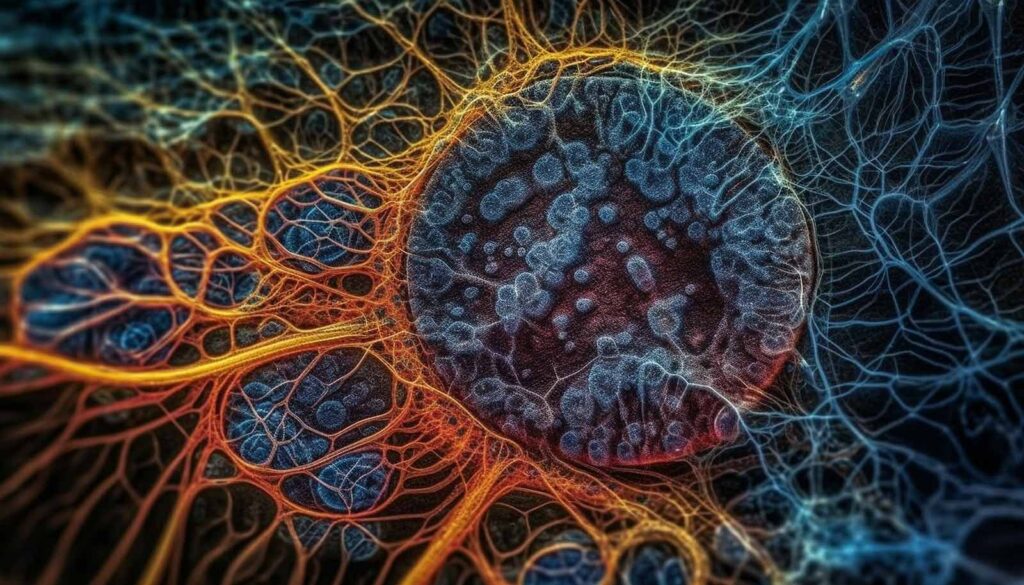
In recent years, important advances have been made in cancer research. New genes and proteins have been identified that are involved in the development of cancer. These discoveries have led to the development of new treatments, such as targeted therapy and immunotherapy. For example, in 2022, the first targeted therapy treatment was approved for pancreatic cancer, a therapy that blocks the action of a protein involved in the growth and spread of pancreatic cancer.
Today, cancer remains a serious disease, but survival rates have improved significantly thanks to advances in research and treatment, and it is expected that in the coming years new, more effective, less toxic therapies will be developed, or that it will even be possible to create new biomarkers that will allow doctors to personalise treatment for each patient.
Some of the most important achievements in the history of cancer are the following;
- 1600 BC: The Edwin Smith Papyrus, the oldest known medical document in the world, describes a cancerous tumour in the chest.
- 400 BC: Hippocrates, the father of medicine, coined the term “cancer” to describe malignant tumours.
- 1543: Andreas Vesalius, an Italian physician, describes cancerous tumours in his book of anatomy.
- 1847: Rudolf Virchow, a German physician, proposes the cellular theory of cancer, which holds that cancer begins in a single cell.
- 1941: Sidney Farber, an American physician, develops modern chemotherapy for the treatment of leukaemia.
- 1953: James Watson and Francis Crick discover the structure of DNA, leading to a greater understanding of cancer biology.
- 1960: The first bone marrow transplant is successfully performed on a leukaemia patient.
- 1984: The FDA approves the first vaccine against human papillomavirus (HPV), which can cause cervical cancer.
- 2011: The FDA approves the first immunotherapy treatment for melanoma cancer.
- 2015: The first clinical trial of CAR-T therapy is successfully completed in a leukaemia patient.
- 2020: The FDA approves the first CAR-T therapy for the treatment of Hodgkin’s lymphoma.
Advances in cancer research are changing the landscape of cancer treatment. New therapies, such as targeted therapy and immunotherapy, are improving survival rates and quality of life for cancer patients. Scientists are working to develop new treatments that are more effective and less toxic than current treatments, searching for techniques that can identify and attack cancer cells with greater precision.
As important as the advances in the diagnosis and treatment of the disease are the research adopted in recent years, aimed at identifying the risk factors for cancer and developing strategies to prevent the disease, including changes in lifestyle, diet and the practice of exercise, which, accompanied by new early diagnosis tools, allow cancer to be detected in early stages, facilitating its treatment and elimination, thus multiplying the survival rates of the disease.
In order to prevent the appearance of the disease, it is advisable to control and avoid the abusive consumption of substances such as tobacco, alcoholic beverages, as well as certain products such as ultra-processed meats and products such as sausages and pastries, which They are elements that can favor the appearance of the disease. Therefore, maintaining a varied, healthy diet, with a predominance of vegetables, legumes and fruits, as well as regular exercise, is recommended in order to prevent the appearance of the disease.
Likewise, it has been shown that cancer has a genetic component of up to 10% incidence, which is why it is advisable, if you have close relatives affected, to be attentive to possible symptoms and even periodically perform tests with the in order to make a premature diagnosis that allows the best possible treatment.
In the coming years, it is expected that new therapies will be developed that are more effective and less toxic than current ones. It is also hoped that new biomarkers will be identified that will allow doctors to personalize treatment for each patient.
With these advances, cancer is likely to become a more manageable and less deadly disease.