


After a car has reached its useful life, it is no longer safe or efficient for road use. However, there are still several ways to continue operating a car after its useful life.
The useful life of a car is defined as the time during which a car can operate safely and efficiently. The lifespan of a car can vary depending on the model, use and maintenance. In general, cars have a useful life of between 10 and 15 years.
However, it is possible to increase the use of many of its components by reusing, recycling or dismantling its components.
The exploitation of the automobile after its useful life helps reduce the environmental impact, reducing, through dismantling and recycling, the volume of waste sent to landfills. The reuse of many of its components as repair or replacement parts helps reduce the consumption of natural resources such as oil or steel, also generating benefits for society in the form of jobs, since the existing industry around the treatment of vehicles after their useful life, includes various production sectors.
Vehicles include many usable materials once their useful life is over, so glass, steel, copper and aluminum can be recycled for new uses with a multitude of applications. Textile materials and electronic components can also be reused or recycled.
The vehicles offer a large number of components that can be easily reused in other vehicles, such as engines, transmission systems, seats and even interior panels. To obtain many of these components and return them to the market, it is necessary to carry out the vehicle dismantling process, a complex process that requires qualified professionals.
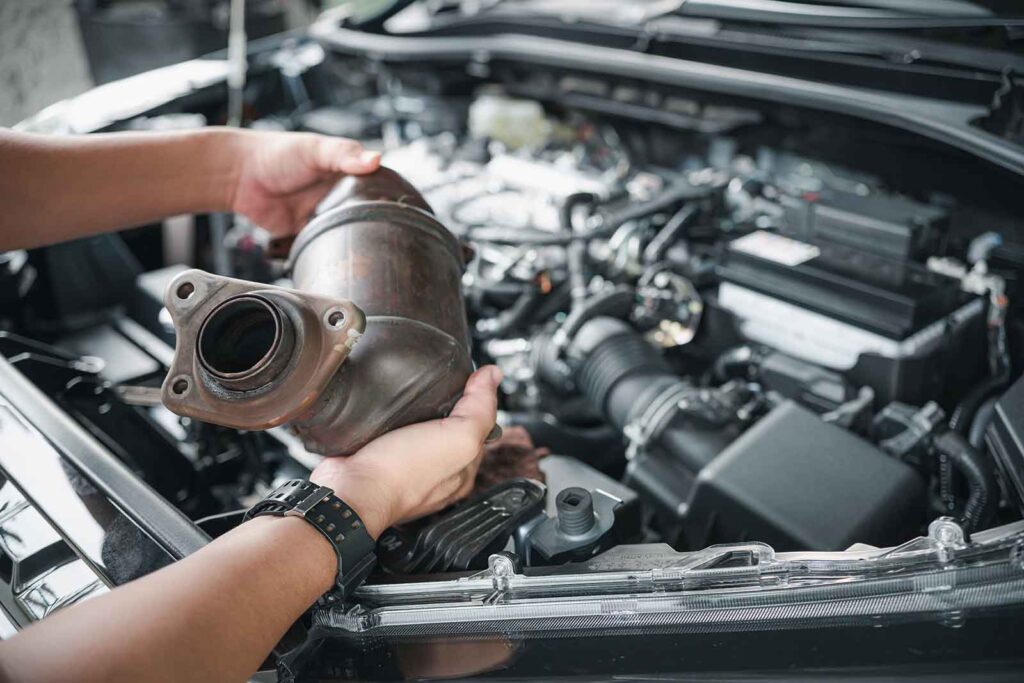
The market around the dismantling and reuse of vehicle components is a growing market that is estimated to reach $200 billion by 2025.
Modern vehicles today are designed to last longer than older vehicles, which means more vehicles are reaching the end of their useful life.
The increased importance of reducing the environmental impact of vehicles, and technological advances that have allowed vehicle disassembly processes to be improved, have increased the demand for reused components.
The main players in the market for dismantling and reusing vehicle components are scrapyards, recycling companies and reuse companies. Scrapyards are responsible for dismantling vehicles and recovering components and materials that can be reused or recycled. Recycling companies are responsible for recycling materials that cannot be reused. Reuse companies are responsible for reusing components that are still suitable for use.
New vehicles are increasingly equipped with electronic components, such as infotainment systems, driver assistance systems and electric propulsion systems. Electronic components that are still suitable for use can be reused in other vehicles or products. For example, screens from infotainment systems can be reused in other electronic devices, such as computers or televisions.
Electronic components that cannot be reused can be recycled to recover materials that can be used to create new products. For example, metals from electronic components can be recycled to create new electronic components or metal products.
The decommissioning segment is the largest segment of the market, and is expected to remain the largest segment in the coming years. The reuse segment is growing rapidly, and is expected to continue growing in the coming years.
The global vehicle dismantling and recycling market is estimated to reach $200 billion by 2025. This growth is driven by a number of factors, including growing environmental awareness, increasing service life of vehicles and technological advances.
Los trabajos en la industria del desmantelamiento y el reciclaje de vehículos van desde puestos de entrada hasta puestos de nivel superior. Los puestos de entrada suelen requerir un diploma de escuela secundaria o equivalente, mientras que los puestos de nivel superior suelen requerir una formación o experiencia adicionales.
Las oportunidades de empleo en la industria del desmantelamiento y el reciclaje de vehículos están creciendo, debido a la creciente conciencia ambiental, el aumento de la vida útil de los vehículos y los avances tecnológicos, cada día es necesario personal más cualificado para realizar las tareas de desmontaje, como operarios de maquinaria y especialistas en reciclaje, como técnicos electrónicos y mecánicos e técnicos industriales.