


There are numerous war conflicts that have marked the history of humanity, some of them large-scale and prolonged in time. However, there are also surprising and curious cases such as the so-called “shortest war in the world”, an episode that lasted only a few minutes but left an indelible mark on history.
On 27 August 1896, the United Kingdom and the Sultanate of Zanzibar, a small territory off the coast of Africa, were involved in a conflict that seemed imminent. The Sultan of Zanzibar, Khalid bin Barghash, had defied the peace agreements imposed by the British and seized power illegitimately.
Faced with this situation, the British representative in Zanzibar, Basil Cave, demanded that Khalid bin Barghash resign his post and leave the palace. However, the Sultan refused to do so and barricaded himself in the palace with a group of loyal followers.
Tensions between the two sides were rising and the UK was determined to take action to restore order. In response to Barghash’s refusal, the British fleet surrounded the palace and prepared the guns for a possible bombardment.
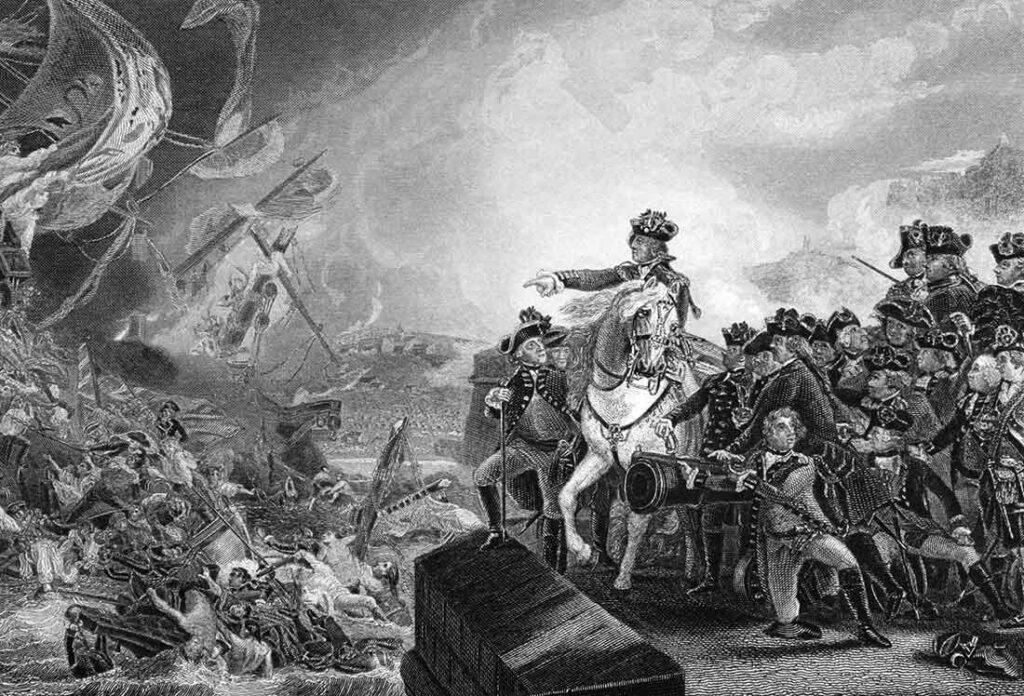
Finally, the moment of truth arrived. At 9:02 a.m., Basil Cave delivered a final ultimatum to the sultan, giving him 45 minutes to surrender and leave the palace. Barghash, confident in his position and the resilience of his followers, again refused.
The hands of the clock were ticking inexorably and time was running out. At 9:47 a.m., exactly 38 minutes after the ultimatum, the British troops opened fire on the palace. The guns fired their shells, while the British artillery reduced the building to rubble, during which time the British warship HMS St. George fired more than 500 shells into the Sultan’s palace.
It was then that something unexpected happened. Amid the chaos and destruction, Khalid bin Barghash decided to surrender. Barely 44 minutes into the bombardment, the sultan and his followers laid down their arms and surrendered to the British forces.
Thus, the world’s shortest war had come to an end. For just 44 minutes, the United Kingdom and the Sultanate of Zanzibar were engaged in a conflict that went down in history for its brevity and abrupt ending, albeit predictable given the disparity of forces between the two sides, a powerful warship and a small army.
The Anglo-Zanzibari war had a significant impact on Zanzibar’s history. The overthrow of Sultan Khalid ibn Barghash marked the end of Zanzibar’s sovereignty and it became a full protectorate of the UK.
This peculiar war reminds us that peace must always be the primary objective in any conflict. Sometimes, even before bloodshed or further damage is done, it is possible to find a peaceful solution that avoids further suffering. Fortunately, in this case, the Sultan of Zanzibar realised that there was no chance of victory and chose to surrender, avoiding further tragedy.
Today, we remember the world’s shortest war as an example of how diplomacy and dialogue are more effective tools than violence and war. It is a reminder that we must always seek the peaceful resolution of conflict and work together for a world where peace is the way forward.
The World’s Shortest War, at 44 minutes long, shows us that peace can prevail even in the most tense moments. It teaches us the importance of seeking peaceful alternatives before resorting to violence and how an act of surrender can prevent a greater tragedy. This short but significant story leaves us with a valuable lesson for the future.