


Canarian migration to America occurred in several stages and with various destinations, practically from the moment of the discovery of the new continent. The Dominican Republic, Cuba and Venezuela were the first destinations, with the aim of contributing to the occupation of the new territories in the face of English expansion. Thus, Canarian migration to Venezuela dates back to the 16th century, where Canarian families founded new towns, from where they colonized and planted new settlements. Since then, thousands of Canarians have emigrated to Venezuela in search of a better life. The conquest and colonization of Venezuela by Spain led to the recruitment of thousands of Canarians to help in the colonization of the new territory.
In later centuries, the Canarians migrated seeking to escape poverty, and seeking the economic opportunities offered by a Venezuela in full economic growth.
At the beginning of the 20th century, Venezuela became one of the main oil producers in the world, which generated a great demand for labor. The situation in Europe in the years of the Great Wars encouraged migration, with many Canarians leaving in search of a better future, destined mainly for Caracas, Maracaibo, Valencia and Barquisimeto.
Later, the failed coup d’état of 1936, after three years of civil war, marked the end of the Second Republic in Spain; however, it also meant a boost to Canarian migration for the Canary Islands. , and the end of the free port regime, a system that had been the driving force of the Canary Islands economy since 1852, bringing serious consequences to an economy heavily dependent on the outside.
In Venezuela in 1935 with the death of the dictator Juan Vicente Gómez, a period of progressive transformations began that had a continuous evolution with the appointment of López Contreras as president of the republic, in those years the presence of Canarian migrants was reduced to the presence of some 700 residents in Mendoza, as migration in Spain was prohibited by the military regime of Francisco Franco, until 1946, this being an exclusive route for the most daring, through clandestine trips.
Years later, with the end of the Second World War, emigration was liberalized, which promoted transfers, being in 1948 El Emilio with 51 men, on a tragic trip in which the ship was surprised by a storm in the Caribbean Sea. The storm was so strong that it caused the ship to sink, with the loss of all crew and passengers on board.
The sinking of the Emilio was a tragedy, however it was not an obstacle for other ships that were received as heroes of Franco’s repression upon their arrival in Venezuela. Faced with this situation, characters emerged who, seeking to enrich themselves with all those who longed to leave, bought boats in terrible conditions, incapable of making the crossing, overcrowded, with a shortage of water and food, and on trips that in some cases exceeded seventy days. crossing,
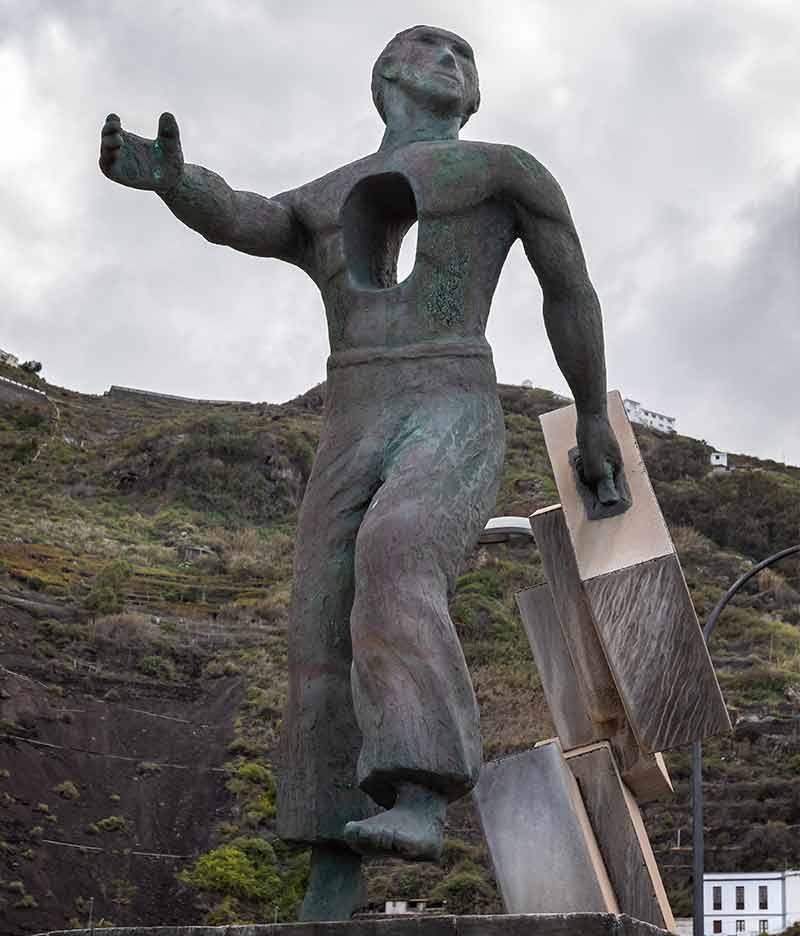
In November 1948, the Venezuelan government was overthrown by a military junta, which, replaced by a dictatorial regime, which soon recognized the government of Spain, and thus put an end to travel from Spain, with the new arrivals taken to prison.
In those years, the vast majority of migrants belonged to the rural population, poorly educated and with no experience outside the agrarian world, composed mainly of men, with the family in many cases being the one that financed the passage. The first years in Venezuela involved constant instability, with many changes of residence, and the permanent search for better jobs.
They settled mainly in Caracas, Maracaibo and Barquisimeto, working mainly in agriculture and livestock, however, and despite everything, the Canarians, through their social contacts, supported each other, offering their homes, given the high cost of rent, giving way to the appearance of rancherías or collective housing.
Soon the Canarians diversified their activities, dairy farmers, fruit growers, farmers, fishermen, some even becoming owners over the years.
Thus, companies such as Lácteos los Andes, a dairy company founded by Carmelo del Castillo in 1948 and which is currently owned by the Venezuelan State since 2008, or Empresas Polar, a business group with interests in the food, beverage, textile, construction, energy and finance, founded by a Canarian migrant in 1949.
In 1970, the Canary-Venezuelan Home of Caracas was created, to which many others were added, all of which ended up converging in 1974 in the Federation of Spanish Centers of Venezuela.
As the immigrant sees his economic situation stabilized, he begins to send remittances to his relatives, favoring the purchase of land, especially among the palm trees. The profitability of crops such as bananas or tomatoes encouraged the creation of farms on sterile surfaces, in areas such as the Aridane Valley or the south of Tenerife, as well as the inclusion of areperas, Venezuelan rum, and the profusion of Venezuelan expressions. parts of colloquial island culture
The Canarian migrants had a significant impact on Venezuelan culture, where they also introduced their own traditions and customs, which mixed with Venezuelan culture to create a new cultural identity. The contribution of Canarian migrants to Venezuela is undeniable and is an example of how migration can be a positive force for the development of a country.
It is estimated that between 100,000 and 150,000 Canarians currently live in Venezuela, most of them descendants of Canarian migrants who arrived in Venezuela in the 20th century, who continue to contribute to the development of Venezuela, many of them businessmen, professionals and workers who perform a important role in the country’s economy and society.
However, motivated by the current economic and political situation that Venezuela is experiencing, in recent years, there has been an increase in migratory returns of Canarians to Spain, although the number of Canarians who have decided to continue their lives in Venezuela is also high. determined to help rebuild the country and build a better future for their families.