


Islote de Lobos, 4.4 kilometers long, is located in the Bocaina Strait, which separates Fuerteventura from Lanzarote, just 2 kilometers from the first and 8 km from the second, and has With more than 100 different plant species, some endemic, and therefore unique with the Siempreviva or the Uvilla de Mar, it has salt marshes, tabaibales from the badlands and halophilic vegetation on the coasts and salty basins, such as the salt flat.
It also has a varied fauna, mainly birds, such as the Cory’s Shearwater, the Little Shearwater, the Common Storm-Petrel, the Bulwer’s Petrel, the Osprey, the Yellow-legged Gull, also highlighting the presence of birds. migratory species such as the Gray Heron, the Little Egret or the Common Tern. It also has the presence of reptiles such as the lizard and the perenquén, as well as small rodents and mammals such as the rabbit.
Under the surface of the water that surrounds Lobos Islet there is a wide variety of aquatic life where we can find rays, old ladies, barracudas, horse mackerels, salemas, sea bream, groupers, pollock, moray eels and whitecaps, in addition to being possible the sighting of pilot whales, dolphins and turtles.
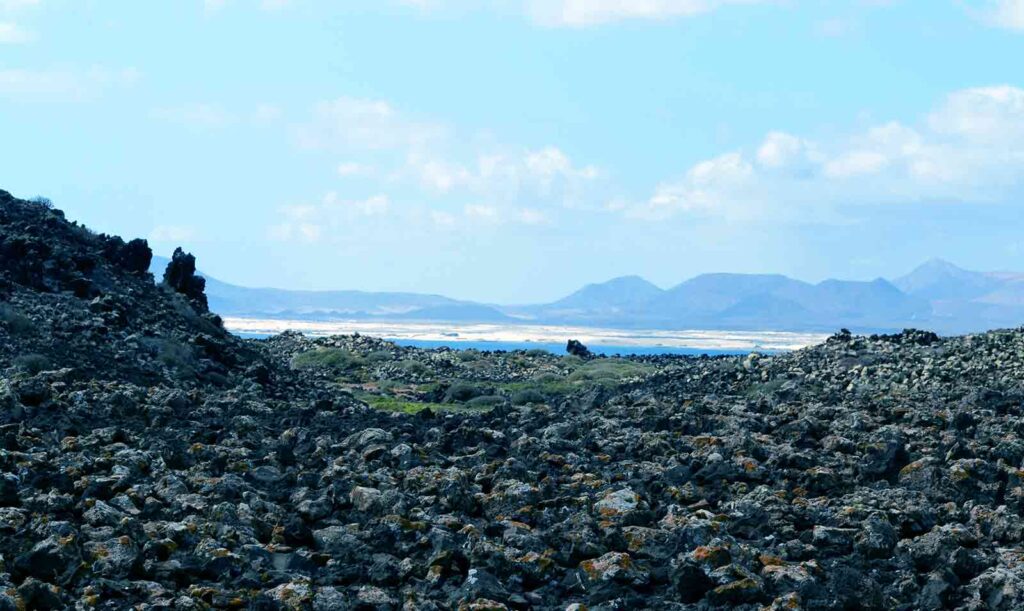
Volcanic and wild in nature, the island of lobos is a treasure of ecological value, with the designation and protection of a Natural Park, which receives its name due to the sea lions and monk seals that inhabited its coasts years ago, and where Roman settlements were established.
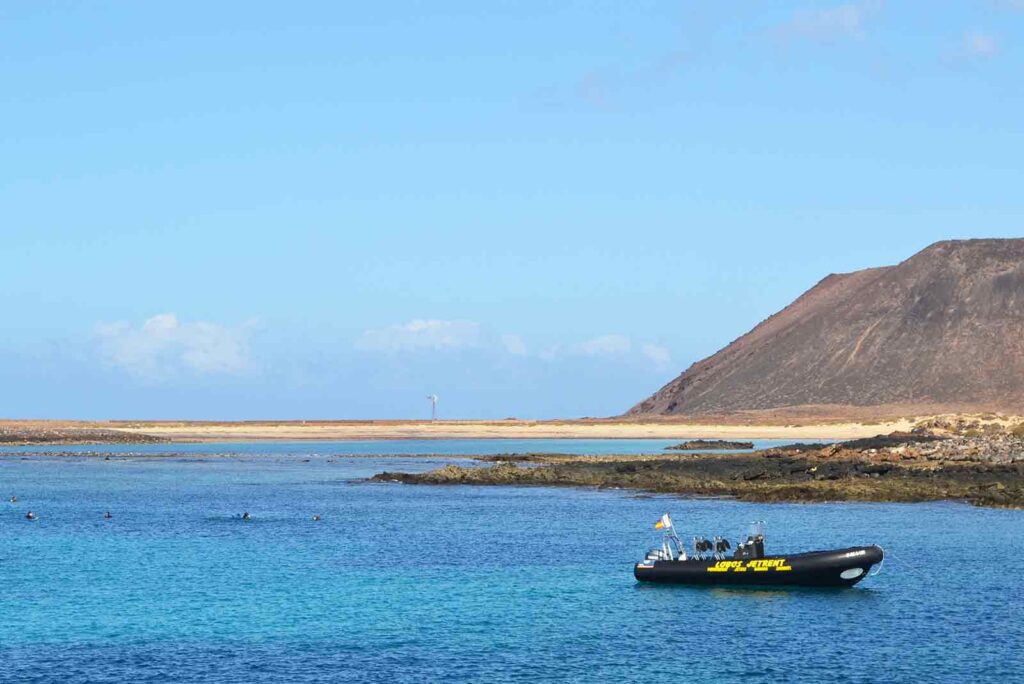
Its 127-meter volcanic cone called La Caldera, represents the highest surface of the islet, which can be reached by boat until reaching Puertito, from where we can start the route by going to the lighthouse of Lobos, either to the beaches of La Caleta, La Concha or El Sobrado, or even access the Caldera.
Thanks to the archaeological sites discovered in recent years, it is known that the Romans visited the islet around the 1st century AD, there being no evidence of occupation until the 15th century when it was included in the dominion of Lanzarote and Fuerteventura, later becoming part of the indivisible mayorazgo of Lanzarote, whose representatives in Fuerteventura were the well-known Colonels of La Oliva.
The Islet, without a resident population, was used for years by fishermen and collectors as a stronghold for fishing and collecting cochineal, periodically settling in small stone huts.
Due to the construction of the Punta Lighthouse, a small population was permanently established on the Islet, building a small hamlet of dry stone huts, along with paths and several underground cisterns, intended for collecting rainwater, in addition to corrals and laundry rooms.
After several donations, purchases and exchanges, the ownership of Islote de Lobos reached Andrés Blas Slaza, who tried to profit from the island through different activities, such as agriculture and livestock, even installing lime kilns, and it was finally sold. taking advantage of the beginning of tourist development in the Canary Islands in 1965, a series of rumors arose as a result of the possible urbanization and tourist exploitation of the islet, until again at the beginning of the 70s it was acquired by the real estate company Geafond, then owner of the Hotels Tres Islas and Oliva Beach, both located in the Las Dunas de Corralejo Natural Park, becoming part of the Canary Islands Network of Protected Natural Spaces in 1982.
In 2003, the ownership of the Island along with the hotels in the Corralejo dunes was taken over by the RIU hotel chain, which was transferred in 2007 to the Ministry of the Environment in exchange for the extension of the hotels’ operating license.
In the 20th century, Lobos Island became a popular tourist destination allowing visitors access to the island to enjoy its natural landscapes, crystal clear waters and rich biodiversity.
In 1982, the islet of Lobos was declared a protected natural area and in 1994, it became a Natural Park, being also declared a Special Bird Protection Area (SPA), and a place of community interest (SCI), with its Master Plan being drafted in 2006. of Use and Management as necessary measures to guarantee its conservation.
Through the Law of Natural Heritage and Biodiversity of the Canary Islands, a series of measures are established for the conservation of protected natural spaces, such as the limitation of their natural resources, the regulation of human activities in the protected space, and the surveillance and control of compliance with the legislation. Through the Master Plan for the Use and Management of the Natural Park, the guidelines for the management of the park are established, among which are the limitation of the use of visitors, the regulation of tourist activities and the conservation of the natural and cultural values of the Park. .
Currently, the Cabildo of Fuerteventura develops education and awareness activities to inform the population about the Natural Park, promoting awareness and education about the importance of conservation of protected natural spaces, highlighting the protection of fauna and flora. , the conservation of the natural landscape and the protection of cultural heritage, while allowing access to more than 25,000 people each year to the islet, tourists who enjoy its crystalline waters and its unique landscape in the world.
Therefore, to visit the Islote de Lobos, it has been necessary since 2019 to request authorization, at least five days before the planned visit date, and a maximum of three people can process authorizations. , to later travel by boat from the bay of Corralejo to the Islote, limiting the presence on the island to no more than 200 people in each shift, morning and afternoon, with a maximum of four hours of stay per shift.
Currently it is possible to enjoy different hiking routes around the Islet, one of the recommended ones being the ascent to the Caldera, the highest point on the island with 127 meters of altitude, 6 km and lasting approximately two hours.