

Mining in Spain has been a fundamental part of the country’s economic and social history for centuries. However, in recent years, this sector has experienced a series of significant transformations that have redefined its role in the Spanish economy and in the world economy.
Mining in Spain has deep roots that date back to Roman times, when minerals such as gold and silver were extracted in various regions of the country. For centuries, mining played a crucial role in the Spanish economy, providing essential raw materials for construction and industry. Mining was one of the most active sectors of the 19th century economy, occupying second place in Spanish exports.
Starting in the 1980s, industrial reconversion forced the closure of many mining wells. The substitution of the use of coal for other sources of energy such as electricity, natural gas and petroleum derivatives, as well as the increase in extraction costs, made many mining facilities unviable and in deficit.
Despite the fact that coal is the only existing energy resource in Spain, ignoring the advantages of energy production from clean energy producing means, such as solar or wind, the measures and agreements taken to combat climate change and implement the guidelines set by Europe regarding the reduction of greenhouse gases, have condemned coal and the entire industry around its extraction and treatment, very significantly reducing its production with respect to the decades of the middle of the 20th century.
At the beginning of the 2010s, in Asturias alone more than 10,000 families depended directly on the mining industry, and in other mining basins such as Galicia, Castilla León, Aragón or Andalusia, it was estimated that more than 5,000 people were directly related to this activity. Industrial.
Today, mining in Spain represents only a fraction of the country’s gross domestic product (GDP), but remains a major source of employment in some regions. Spain’s main mining areas include the Río Tinto basin in Andalusia, coal mines in Asturias and Castilla y León, and potash mining in Navarra and Aragon.
Despite its relatively modest economic contribution, mining remains crucial for the supply of essential minerals and raw materials in Spanish industry. Spain produces a variety of minerals, including coal, potash, salt, gypsum, magnesite and marble. These minerals are used in various industries, from construction to agriculture and energy production.
The mining sector in Spain is currently facing several challenges. One of the main ones, without a doubt, is the growing pressure to adopt more sustainable and environmentally friendly practices. Traditional mining has often had a negative impact on the environment, causing water and soil pollution, as well as landscape degradation. In response to these concerns, mining companies in Spain are working on implementing cleaner technologies and reducing their environmental footprint.
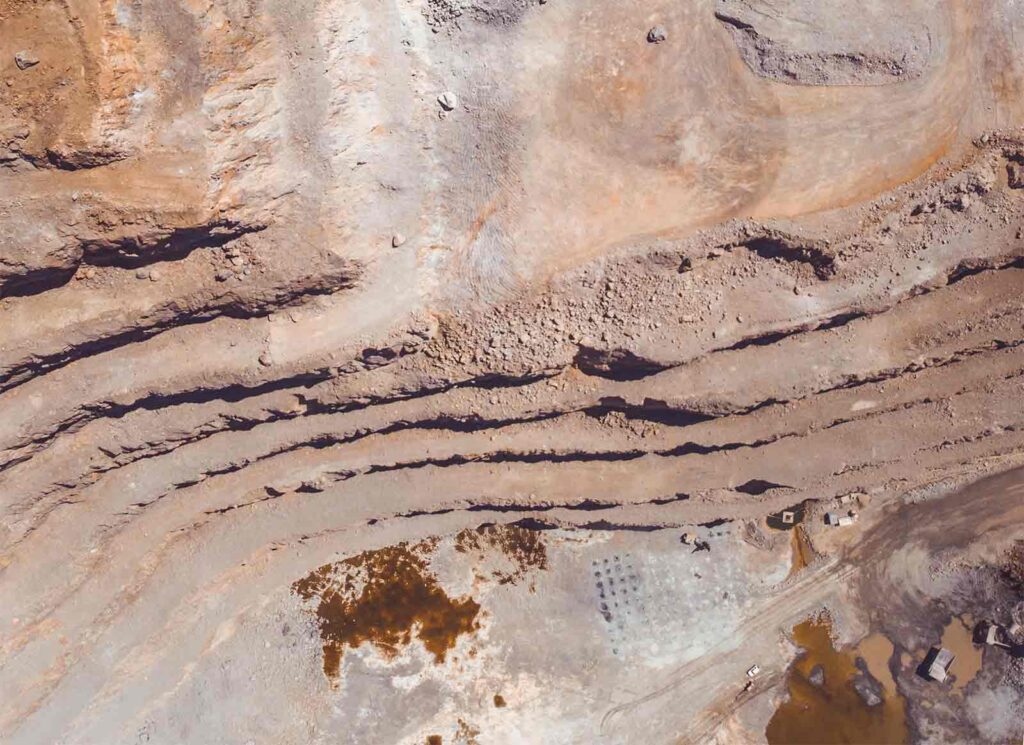
Surprisingly, Spain is the third country in Europe with the most mining resources. Under the ground there are a large amount of minerals, some strategic and others essential for today’s industry. Rare earths, Cobalt or Graphite, are some of the elements that we can find in our soils. However, environmental pressures and administrative and bureaucratic obstacles have paralyzed more than thirty extraction projects in Spain.
As a consequence of the above, Spain spends more than 10,000 million Euros a year on importing metals existing in our soil. Meanwhile, in Cáceres for example, the second largest lithium mine in Europe is located, a metal that is currently used in the manufacture of batteries, mobile phones, ceramics, glass, lubricants and even in some medicines used for bipolarity treatments. .
Despite everything, mining in Spain also presents significant opportunities, thus one of the areas with growth potential is the mining of strategic minerals, such as rare earths, which are essential for the manufacture of electronic devices and that have a growing demand in the context of the transition towards electric mobility and renewable energies.
Spain has two large deposits in Pontevedra and Ciudad Real, which could make us world powers in the extraction of Rare Earths, however both projects have been stopped for ecological reasons.
If we look at the wealth of the materials previously exposed, and existing in our soils, it is clearly deducible the level of wealth that their extraction could mean for the corresponding communities, and the revitalizing role of the economically regions. most depressed that their extraction could play. Job creation in rural areas and investment in mining infrastructure could have a very positive impact on regional development.
The social and environmental impact of mining in Spain is a topic of constant debate. While mining can provide employment and economic development in areas of need, it can also raise concerns about the health and well-being of local communities. Proper waste management, landscape restoration and active consultation with communities are critical aspects to minimize negative impacts.
Mining in Spain has evolved over the centuries, going from being a dominant industry to a more specialized and sustainable economic activity. As the country moves towards a greener and more technological economy, the mining sector has the opportunity to play a crucial role in the production of minerals essential for modern industry.
In the coming years it will be essential to find ways that allow the extraction of many of these materials, metals and rare earths, so that through technology and science, we will be able to modify the landscape to the smallest extent possible, and generate the minimal polluting effects associated with its extraction, since according to estimates made by different organizations in the not too distant future, the volume of cobalt and rare earths will need to quintuple before 2050.
However, to do so sustainably, it is essential to address environmental and social challenges, ensuring that mining contributes to the sustainable development of Spain in the 21st century.