


La Niña and El Niño are atmospheric phenomena familiar to meteorologists. Both weather phenomena are produced mainly by variations in the surface water temperature of the central and eastern Pacific Ocean, having a great impact on the climate around the world.
When the waters of the Pacific Ocean become warmer than normal in tropical latitudes, they produce an increase in temperatures, which are warmer than normal, causing changes in circulation and atmospheric conditions resulting in floods, droughts or heavy rains, affecting agriculture, livestock and fisheries in various parts of the world. La Niña and El Niño are atmospheric phenomena familiar to meteorologists. Both weather phenomena are produced mainly by variations in the surface water temperature of the central and eastern Pacific Ocean, having a great impact on the climate around the world.
This phenomenon known as El Niño is generated every certain number of years, which has been formally known since the beginning of the 20th century, however, its relationship with atmospheric variations was not evident until the end of the years seventy.
In the early 1970s, William Quin categorized El Niño events back in history to the early 1500s, gathering information on ocean temperature and precipitation from various sources, and historical evidence of flooding.
Initially, Peruvian fishermen (the place where the detection of the El Niño phenomenon is estimated) called “the El Niño current” a warm current that moves from north to south along the coast of Peru and Ecuador, repetitively. every year around the month of December.
During the first half of the 20th century, Gilbert Walker carried out studies related to tropical climate variations, with the aim of predicting the variability of monsoon precipitation in the Indian Ocean. In his measurements he noticed that the atmospheric pressure was higher in Indonesia while lower pressures were observed in the tropical zone of the Pacific Ocean, variations that coincided in time, and that occurred every certain number of years.
During El Niño events, warm, moist air from the central and eastern tropical Pacific moves westward toward the western tropical Pacific. This causes an increase in precipitation in the western tropical Pacific, and a decrease in precipitation in the central and eastern tropical Pacific. During El Niño events, tropical cyclones are more likely to form and intensify in the eastern Pacific.
The formation of the El Niño phenomenon is due to a combination of factors, the Southern Oscillation, a climate pattern characterized by the fluctuation of atmospheric pressure in the central and eastern area of the tropical Pacific. , the weakening of the trade winds, which are those that blow from east to west in the Tropical Pacific, and the increase in surface temperature, favor the appearance of the El Niño phenomenon.
El Niño can cause major droughts in places such as Australia, East Africa and South Asia. It can also affect torrential rains and flooding in South America, from Ecuador to Chile, in East Africa, Kenya, Somalia and Tanzania, and South Asia, affecting the coast of India, Bangladesh and Sir Lanka.
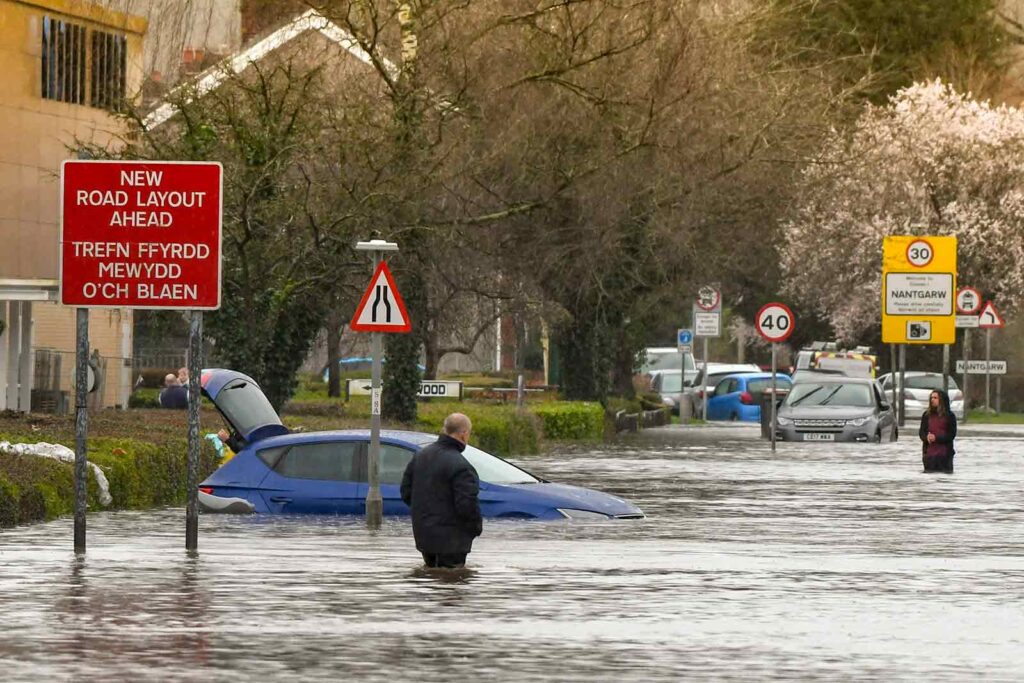
The effects of El Niño take months to be noticed, producing an increase in temperatures in summer, with more intense and prolonged heat waves, and colder and drier winters.
The duration of the El Niño phenomenon is usually between 9 and 12 months, although on occasions it has extended over time, producing episodes that have lasted up to 18 months.
The El Niño phenomenon has a significant impact on the population and the world economy, and can cause the loss of human life due to floods, landslides and other disasters that it can cause, and as a consequence of these disasters, El Niño favors the increase of some diseases such as cholera, dengue and malaria.
The effects of El Niño can generate a direct or indirect impact on the economy by causing damage to infrastructure, loss of crops, affecting food production and causing an increase in prices. In countries like Zimbabwe, whose economy depends largely on corn production, the effects of drought caused by El Niño can be terrifying, while in regions of South America, farmers will be able to obtain better rice crops as rainfall increases.
The effects produced by Niño in the period 1982-83 are estimated to have cost more than 10,000 million dollars, leaving significant droughts in countries such as Ethiopia, Tanzania and Zimbabwe, reducing corn and cereal harvests, and favoring the emergence of huge fires in areas of southern Africa, Indonesia and Australia.
Meanwhile, rainfall in Ecuador was 30 times higher than normal, reaching 340% higher in northern Peru, where landscape modifications even occurred in certain areas due to increased river flows and flooding. of large regions.
The last El Niño episode occurred between 2015 and 2016, making 2016 the warmest year recorded so far, contributing to increased loss of tropical forests, the generation of forest fires and an increase in snowmelt. polar, among other effects.
Along the equator, the ocean is made up of three layers, a superficial and warm one, an intermediate one called the “thermocline” and a deep and cold one. The thermocline is located approximately 200 meters deep to the west of the equatorial Pacific, but only 50 meters to the east of the same ocean, and the displacement generated from west to east by the thermocline generated by abrupt variations in the trade winds produces the increase in the depth of the thermocline in the eastern equatorial Pacific, preventing the rise of deeper and colder water, and promoting the warming of water in the areas of Colombia, Ecuador and Peru and generating fluctuations in the surface temperature of the sea , generating alterations in the climatic patterns known by the El Niño phenomena and its opposite La Niña.
The El Niño phenomenon is a natural event that occurs irregularly, with an average periodicity of between two and seven years. However, climate change is making El Niño events more frequent and intense.
In the case of Spain, El Niño can have a significant impact on climate and meteorology. During El Niño, warmer and drier winters than normal can occur, negatively affecting agriculture and livestock, and even causing an increase in extreme weather events in some areas, such as storms and floods, generally increasing precipitation in the north. and west of the country, and a decrease in the south and east.